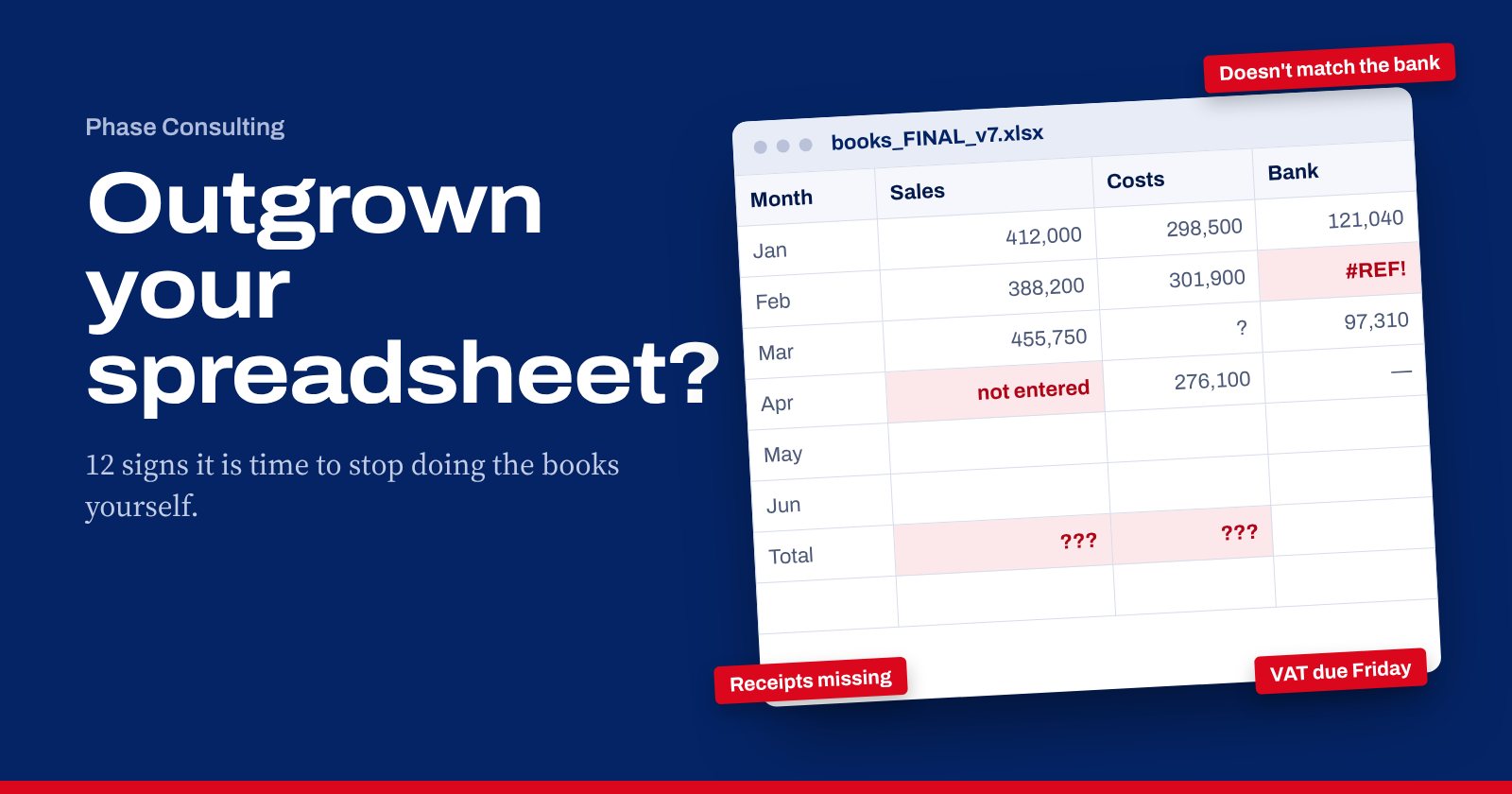
Almost every business starts the same way: the owner keeps the books in a spreadsheet, a notebook or a free app, late at night, after the real work is done. That is sensible at the beginning. The problem is that businesses rarely notice the day they outgrow it.
DIY bookkeeping does not fail loudly. It fails quietly, through invoices nobody chased, expenses nobody claimed and decisions made on numbers that were three months old. Here are the twelve signs we see most often, in businesses from Lahore to London to Dubai.
Signs in your numbers
1. Your bank balance and your books never match. If you cannot reconcile your bank account to the last rupee, pound or dirham every month, every report built on those books is a guess.
2. You find out you made a loss months later. Profit should be known within two weeks of month end, not when the accountant prepares the year-end accounts.
3. Customers owe you money you forgot about. Unchased receivables are the most expensive bookkeeping mistake. They are cash you have already earned and are not collecting.
4. You cannot say which product, service or branch makes money. If everything sits in one "sales" line and one "expenses" line, you cannot price, cut costs or expand with confidence.
Signs in your time
5. You spend more than four hours a month on the books. Put a price on your own hour. For most owners, that time is worth far more spent on sales, customers or operations.
6. Month end has become quarter end. When reconciliation slips from monthly to "when I get time", errors pile up and become much harder to trace.
7. Receipts live in a drawer, a phone gallery and an email folder. If supporting documents are scattered, you will lose deductions and struggle in any tax enquiry.
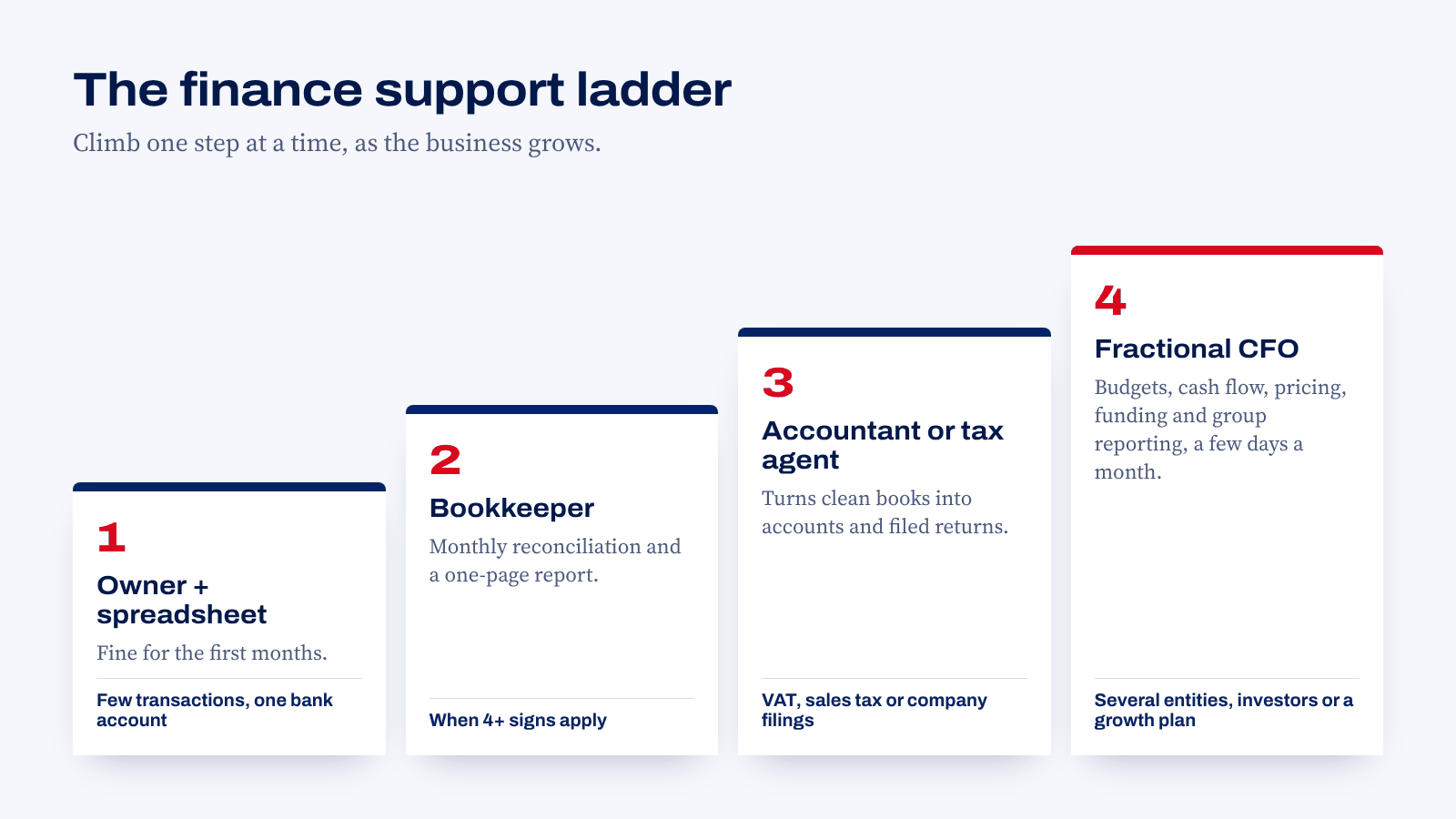
Most businesses climb this ladder one step at a time. You rarely need to jump straight to the top.
Signs in compliance
8. Tax deadlines feel like emergencies. Sales tax, VAT or quarterly updates should be a routine export from clean books, not a weekend of panic.
9. You have paid a late-filing penalty or interest. One penalty is a warning. Two is a pattern, and it is almost always cheaper to fix the process than to keep paying.
10. You have received a notice and did not know how to answer it. Tax authorities in Pakistan, the UK, the UAE and most other countries now cross-check bank, VAT and income data. Answers need to come from reconciled records.
Signs in growth
11. A bank, investor or buyer asked for your accounts, and you were not ready. Financing and partnerships move at the speed of your financial records.
12. You have added a second location, entity, currency or business line. Complexity multiplies. Intercompany balances, multi-currency accounts and consolidated reporting are where spreadsheets break.
Score yourself
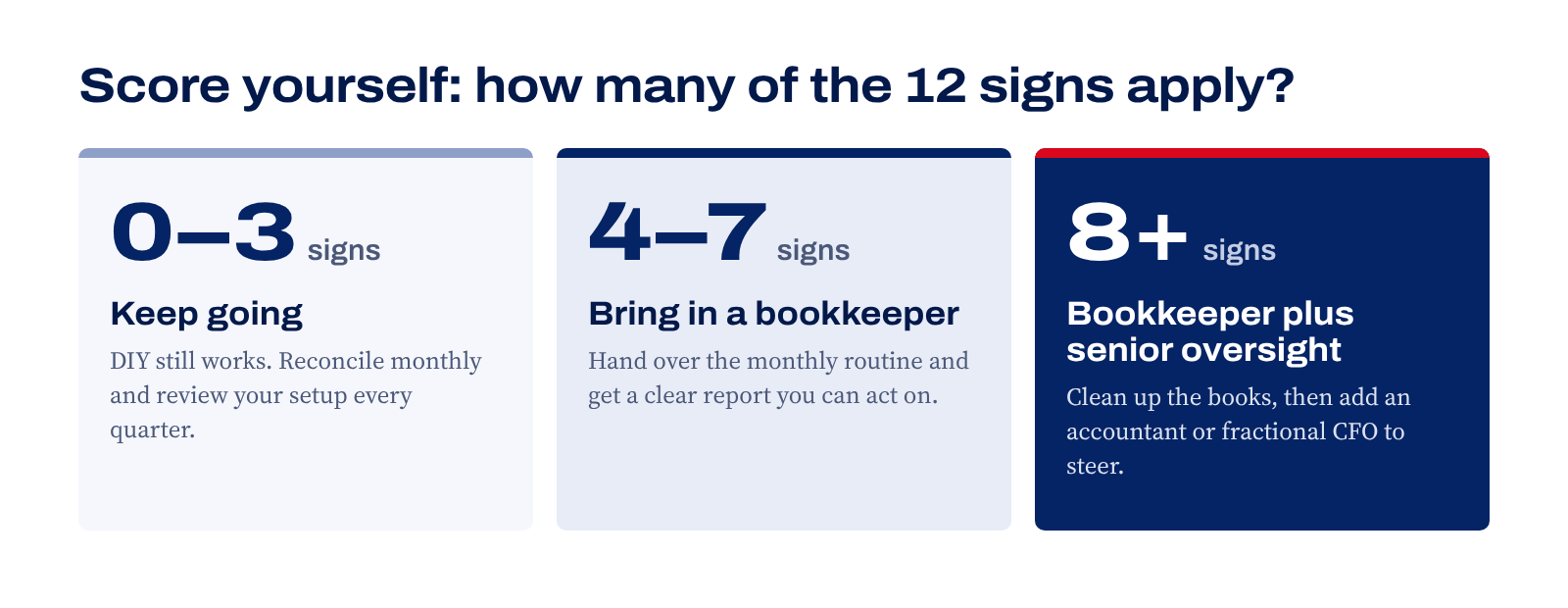
Count how many of the twelve signs apply to you today.
What to do next
You do not need a full finance department. In most cases the right next step is one of these:
- A remote bookkeeper who works inside your own Xero, QuickBooks or similar file, reconciles every month and sends you a one-page report.
- An accountant or tax agent who takes those clean records and files your returns.
- A fractional CFO a few days a month, once you have several entities, investors or a growth plan to fund.
The order matters. Clean monthly books come first, because every other kind of help depends on them.
If you scored four or more, the cost of help is almost certainly lower than the cost of carrying on alone.
Phase Consulting provides all three, remotely, to clients in any country. Book a free consultation and tell us your score. We will tell you honestly which step you need, even if the answer is that you can keep going on your own for now.
Quick answers
When should a small business hire a bookkeeper?
When the owner spends more than a few hours a month on the books, the bank is reconciled late or not at all, or tax deadlines start to feel rushed. Most businesses reach this point well before they can afford a full-time accountant.
Is it cheaper to do my own bookkeeping?
Only on paper. Missed expenses, late-filing penalties, unpaid invoices and the owner's own time usually cost more than a part-time or remote bookkeeper.
What is the difference between a bookkeeper and an accountant?
A bookkeeper records and reconciles transactions every month. An accountant uses those records to prepare accounts and tax returns and to advise you. Most growing businesses need both, in that order.

Muhammad Najam Abbas
Director & Chief Consultant, Phase Consulting. CMA Finalist with 15+ years in financial operations, ERP implementation and tax compliance at multinational companies and corporate groups.